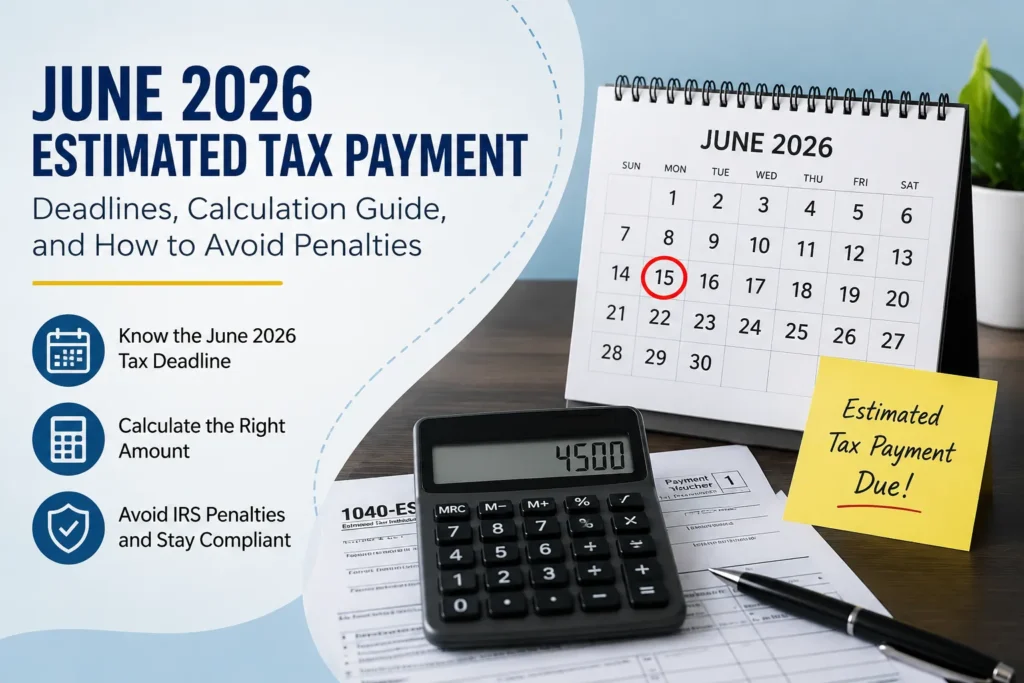
Quarterly tax payments can feel like the IRS keeps knocking on your door all year, asking how things are going with your income. Instead of one big talk in April, you are having four smaller talks spread through the year. Think of this guide as someone walking beside you, pointing out what to do next on how to file quarterly taxes, when are quarterly taxes due and how to calculate quarterly taxes.
What quarterly tax payments really mean
When money comes in from freelance work, clients, gigs, or your own business, nobody is holding back tax for you. Quarterly estimated tax payments step in here. They are your way of telling the IRS, Here is your share, bit by bit, as I earn it. This keeps you from facing one huge, scary bill later.
You look at your year, see that tax is building up, and send pieces of it every few months. That is all quarterly tax payments are: small, planned check‑ins with your tax bill instead of one painful surprise.
Who should pay them and why
Picture two people. One has a regular job with tax already taken out of each paycheck. The other runs a small business or freelancers. The first person often never thinks about pay quarterly taxes. The second person usually has to.
If you know you will owe at least 1,000 dollars in tax that no employer is handling for you, the system expects you to step up and pay throughout the year. You are basically telling the IRS, I am earning on my own, and I am staying on top of what I owe, not waiting until the last minute.
How the June 2026 payment fits in
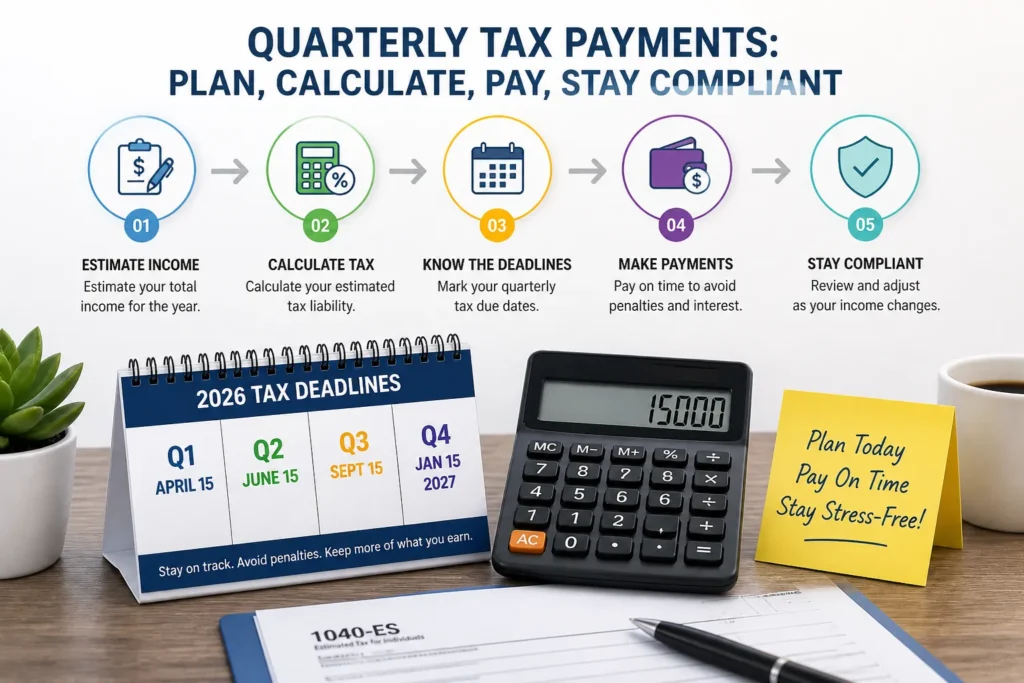
Now imagine the year divided into four checkpoints. You pass one in April, one in June, one in September, and one in January of the next year. The June 2026 estimated tax payment is that second checkpoint.
By June, you already have a feel for how your year is going. Maybe work is booming. Maybe it slowed down. That June payment is your chance to adjust. You look at what you have earned so far and say, Here is what makes sense now, so I do not fall behind.
A simple way to figure out your payment
You do not need to think like an accountant. You just walk through a clear story about your money:
- Start by asking, How much do I think I will make this year from all my self‑employed work and other income?
- Then ask, What are my business costs and other deductions that reduce this?
- Once you have a rough yearly number, you use a calculator, software, or tables to see how much tax that amount leads to.
- Next, you check whether any other job is already taking out some tax for you. You subtract that.
- Whatever is left is the tax you need to cover with your quarterly tax due dates. You split that into four parts, or adjust them as your income rises and falls.
You are not trying to be perfect. You are trying to stay close enough so that no big penalty shows up later and no giant bill lands in your lap.
How you actually send the money
When it is time to pay, you do not have to overthink the method. You pick what feels easy and safe:
- You can pay straight from your bank online.
- You can use the government payment system that remembers you each time.
- You can use a card if you prefer, or even mail a check with a slip.
What matters most is that the money reaches them by the estimated tax payment deadlines. You treat quarterly tax payments like rent or a key bill: non‑negotiable, planned for, and never ignored for estimated tax liability.
Staying ahead of penalties
Penalties show up when the story you tell with your payments does not match your income. The IRS looks at your year and says, You earned this much, but you waited too long or sent too little along the way.
You stay ahead of that by:
- Paying on time every quarter, even if the amount is not perfect.
- Aiming to cover most of what you will owe, not the bare minimum.
- Checking in with your numbers when your income jumps or drops, instead of waiting until tax season.
Frequently Asked Questions
What are quarterly tax payments?
Think of quarterly tax payments as paying your tax bill in four smaller chunks during the year so you are not hit with one big shock in April and you keep the IRS satisfied as you earn.
Why do self‑employed people talk so much about quarterly taxes?
When you are self‑employed no boss is taking tax out for you so you are the one who has to send money in, and quarterly taxes are the routine that keeps you from falling behind.
What is special about the June 2026 estimated tax payment?
The June 2026 estimated tax payment is your second check‑in with the IRS where you look at how the year is going and adjust your payment so your tax story still makes sense.
What if I ignore quarterly tax payments and just wait until April?
If you wait until April you may owe a large amount all at once and the IRS can add extra charges because you did not pay along the way even if you pay the full bill at filing taxes quarterly.
How can I make calculating quarterly taxes feel less scary?
You break it into a few calm steps estimate your yearly income knock off your costs check your tax with a simple tool and then split that number into realistic quarterly amounts.
Do I still need an annual return if I pay quarterly?
Yes you still file your yearly return because quarterly payments are just prepayments and the return is where everything is added up and checked for any extra amount or refund.
What if my income changes a lot during the year?
If your income jumps or drops you look again at your numbers and adjust your next quarterly payments so they line up better instead of waiting for a surprise later.
Is there a way to make quarterly tax payments feel routine?
Many people treat them like a bill they cannot skip by putting money aside each month so when the due date arrives the cash is already sitting there ready to send.
How do quarterly tax payments help my business cash flow?
By spreading tax over four payments you avoid one huge hit to your bank account and you can plan around those dates so your business has room to breathe.
What is one simple habit that keeps me organized for quarterly taxes?
A simple habit is to keep all invoices expenses and payment proofs in one place and review them every quarter so you always know where you stand before you send money.