Section 121 exclusion is one of those golden rules for homeowners that can save a big chunk of money when selling a home. Many people either don’t know it exists or think it’s too complicated to use. The truth is, it’s pretty straightforward once you understand the basics. This is the go-to guide for anyone who wants to keep more money in their pocket after selling a home.
What is the Section 121 Exclusion
The section 121 exclusion comes straight from tax code 121, also known as IRC section 121, and it’s basically a way for the IRS to let you keep some, or even all, of your profit when selling your main home.
Think of it this way: the IRS allows homeowners, if this is your primary residence, you worked hard on it, you lived there, and you’re selling it, we’ll give you a tax break on the gains. That’s what makes the 121 home sale exclusion so important.
It’s also called:
- home sale exclusion
- primary residence exclusion
- capital gains exemption for primary residence
It’s a powerful, legal tax-saving strategy when used correctly.
How Much Can You Exclude
Here’s the part people love. The section 121 exclusion allows:
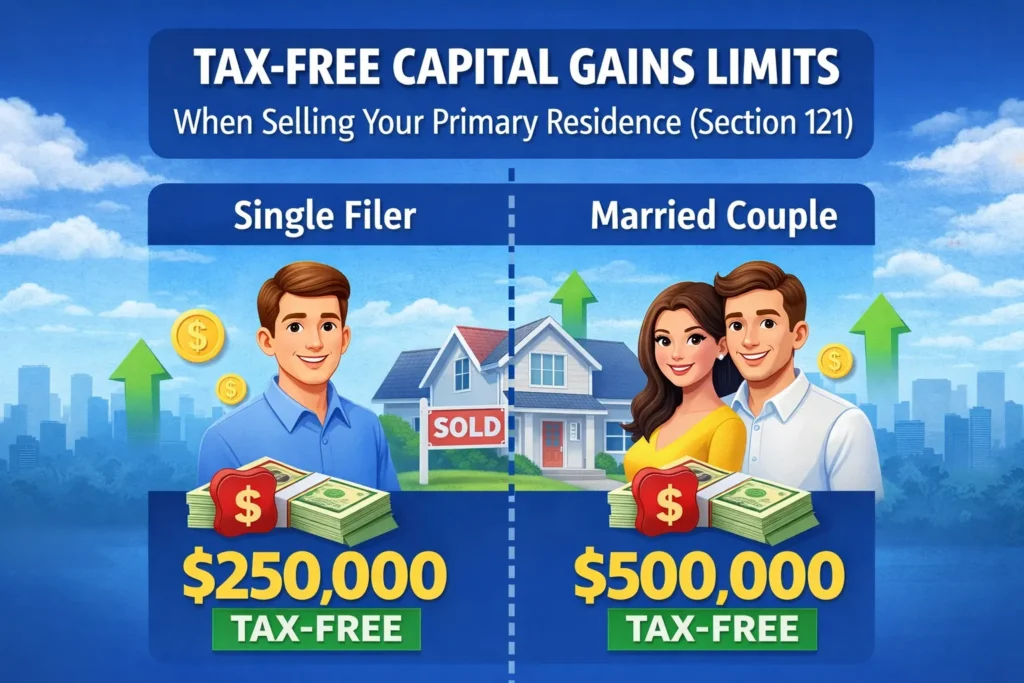
- Single filer: up to $250,000 tax-free
- Married filing jointly: up to $500,000 tax-free
Here’s a quick table to make it simple:
| Situation | Profit on Sale | Tax You Pay |
| Single | 200,000 | $0 |
| Married | 450,000 | $0 |
| Married | 600,000 | Tax on 100,000 |
See how it works? This is why everyone should know about the sale of home exclusion before selling.
Who Qualifies
You can’t just sell any property and get this benefit. The section 121 exclusion comes with rules, but they’re not scary.
Requirements:
- The home must be your primary residence
- You must have owned it for at least 2 years
- You must have lived in it for at least 2 years
- You cannot have used the exclusion in the past 2 years
This is called the ownership and use test under IRC 121. Stick to it and you’re good.
What Counts as a Primary Residence
The primary residence exclusion only applies to the place you really live.
Qualifying homes:
- Single-family homes
- Condos or townhouses
- Apartments
- Mobile homes
Non-qualifying homes:
- Vacation homes
- Rental or investment properties without conversion
Understanding what is the 121 home sale exclusion is key here because it only applies to the main home.
Can You Use It More Than Once
Here’s a common question: Is the section 121 exclusion a one-time deal?
Nope. It’s not a one time capital gains exclusion. You can use it as many times as you want, but only once every 2 years. That’s a big deal for people who move frequently or upgrade homes often.
Special Situations
Life doesn’t always follow a straight path. Sometimes you have a job move, health issues, or other circumstances.
Even then, you might still get a partial section 121 exclusion. It’s flexible, but you have to follow IRS rules closely.
Calculating Your Gain
Here’s how to see if you’ll benefit:
- Selling price of your home
- Minus what you paid for it
- Minus the cost of improvements
- That’s your gain
Example:
| Item | Amount |
| Purchase price | 200,000 |
| Renovations | 50,000 |
| Selling price | 400,000 |
| Gain | 150,000 |
If your gain is under the limits, the section 121 exclusion wipes out the tax.
Mistakes People Make
Even with a simple rule like this, mistakes happen. Watch out for:
- Not living there for the full 2 years
- Counting a rental property as primary residence
- Forgetting the 2-year limit from the last sale
- Miscalculating renovations or improvements
Avoid these, and the IRS code 121 works perfectly.
Section 121 Exclusion vs Investment Property
It’s important to know the difference:
| Feature | Primary Residence | Investment Property |
| Tax benefit | Yes | No |
| Exclusion | Yes | No |
| IRS rule | section 121 exclusion | Capital gains tax applies |
If you’re thinking about converting a rental to a primary residence, this is exactly why people do it before selling.
Tips to Maximize Benefits
Want the most out of the section 121 exclusion?
- Stay in the home at least 2 years
- Keep receipts and records for all improvements
- Plan your sale carefully
- Don’t move around too often without thinking about IRS rules
These little steps can save thousands.
Real-Life Example
Imagine a couple buys a house, lives in it for 3 years, and sells it for 300,000 dollars profit.
- Single filer? 250,000 excluded, pay tax on 50,000
- Married couple? Full 300,000 covered under section 121 exclusion
It’s a huge deal for homeowners planning moves.
Why It Matters
The section 121 exclusion isn’t just about taxes. It’s about planning, saving, and making your home work for you financially.
- Keeps more money in your pocket
- Encourages home ownership
- Makes moving or upgrading homes easier financially
If used correctly, it can be one of the smartest moves any homeowner makes.
Frequently Asked Questions
What is the section 121 exclusion?
The section 121 exclusion lets homeowners exclude profit from taxes when selling their main home, up to IRS limits, under tax code 121.
How much profit is tax free?
Single filers get up to 250,000 and married couples get up to $500,000 tax-free under the 121 home sale exclusion.
Can it be used more than once?
Yes, the section 121 exclusion can be used multiple times as long as you wait at least 2 years between uses.
Does it apply to rental properties?
No, only a primary residence qualifies. Rental properties must be converted and meet rules to benefit.
What if profit exceeds limits?
Gains above the allowed limit under irc section 121 are taxed at regular capital gains rates.
Do both spouses need to meet requirements?
Only one spouse needs to meet the ownership test; both must meet the use test for married couples.
Can renovations help?
Absolutely. Documented renovations increase the cost basis, lowering taxable gain before section 121 exclusion applies.
Is reporting required?
Often not if fully excluded, but always check IRS rules. Keep records to prove eligibility.
What counts as living in the home?
Living there means it’s your main home for at least 2 years in the 5 years before sale under irc 121.
Can job relocation qualify?
Yes. Partial exclusion is possible for work moves, health reasons, or unforeseen circumstances.