Let us talk about something that keeps business owners up at night. You have done the work, sent the invoices, and now you are just waiting. Waiting for money that should already be in your account. Waiting to pay your own bills. Waiting to make payroll. This is the reality of running a business that extends credit, and it can be incredibly stressful.
The truth is, late payments are a fact of business life. But there is a way to actually see what is happening with your money, to spot problems before they become crises, and to get paid faster. That tool is accounts receivable aging analysis.
What is Accounts Receivable Aging?
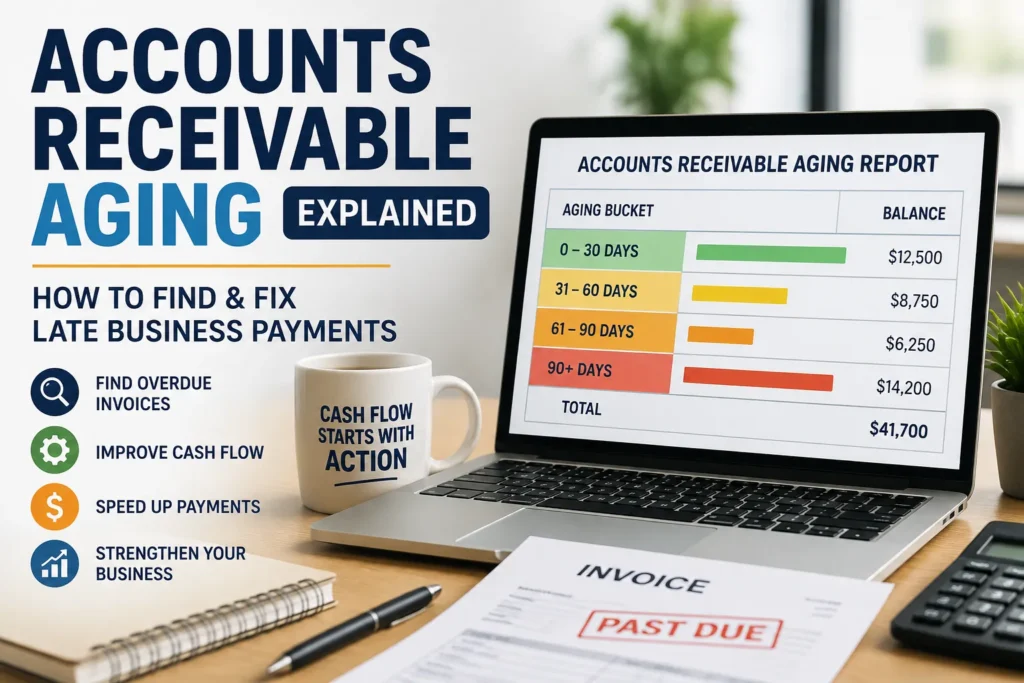
Accounts receivable aging is simply the practice of grouping your unpaid invoices by how long they have been outstanding. Instead of looking at one big number that represents everything owed to you, you see a clear picture of how much is current, how much is a little late, and how much is seriously overdue.
This is usually presented as an accounts receivable aging report, which lists all your unpaid customer invoices sorted into date ranges. The standard ranges, or buckets, are typically 0-30 days, 31-60 days, 61-90 days, and more than 90 days past due. This simple structure is the backbone of effective credit and Accounts Receivable Management.
Why This Matters for Your Business
The further an invoice ages, the harder it is to collect and the higher the risk that it will never be paid at all. It is a basic reality of business finance. An invoice that is 90 days overdue is in a completely different category of risk than one that is just a week late. The aging report makes this risk visible and actionable.
Let us break down what each bucket typically means.
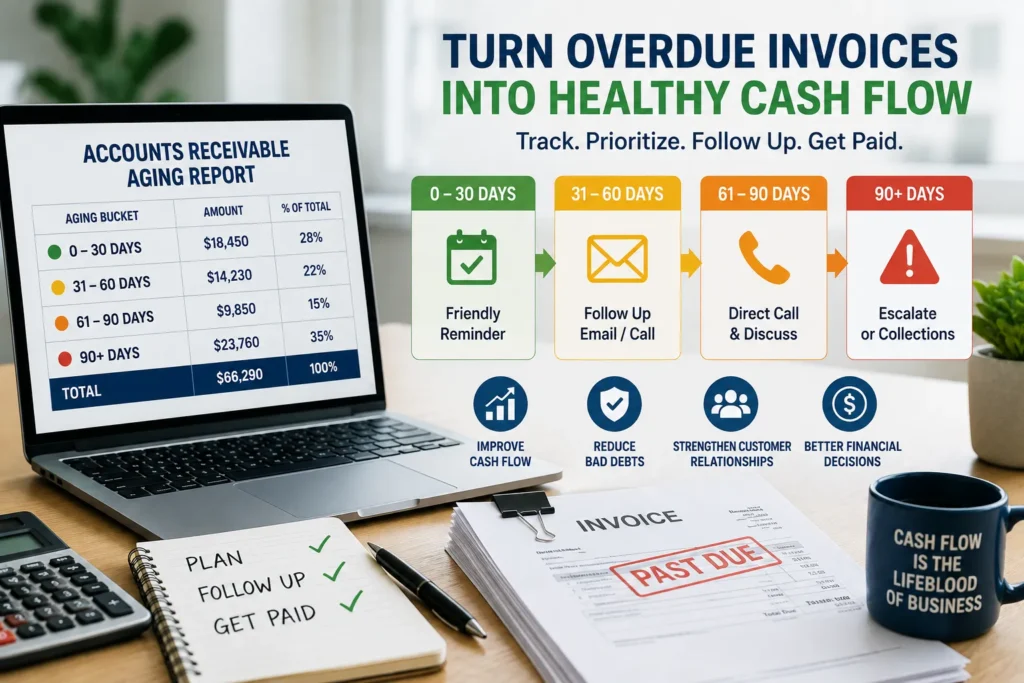
- Current: Invoices not yet due. No action needed beyond a courtesy reminder near the due date.
- 1 to 30 days past due: Usually an oversight or a slow approval. A prompt, friendly reminder recovers most of this.
- 31 to 60 days: No longer an accident. This customer needs more specific follow-up that names the consequences.
- 61 to 90 days: A real collection problem. These accounts need a direct phone call and a clear ask for a payment date.
- 90-plus days: High risk. Collection odds drop sharply here, and these are the accounts that drift toward a collection agency or a write-off.
How to Fix Late Payments Using the Aging Report
The real power of the aging report is not in looking at it. It is in acting on it. The point is action, and action is most effective the moment an invoice crosses a bucket boundary.
Prioritise Follow-Up by Age and Amount
You cannot chase every overdue invoice at once. You need to focus your energy where the risk is highest. Start with the largest balances in the 61 to 90 and 90-plus day buckets first. A customer with a large balance that is months overdue is your biggest threat. For the 31 to 60 day bucket, call the customer and request a promised payment date and confirm they received the invoice. For current and 1 to 30 day invoices, a light automated reminder is usually enough to prevent them from slipping further.
Automate Reminders and Use Multiple Payment Options
Set up automated reminders that go out before and after the due date. A friendly nudge a few days before payment’s due can jog their memory and keep it from becoming overdue. Then a follow-up a few days after keeps it top of mind. This little bit of automation cuts down the time you spend chasing payments and keeps your customers in the loop.
You also wanna make it as easy as possible for them to pay. Include payment links right on every invoice — credit card, debit card, ACH, whatever works for them. The fewer steps between opening that invoice and paying it, the faster you’ll get your money.
Estimate Bad Debt and Investigate Internal Issues
The aging report is also a tool for estimating potential bad debts. By applying a higher reserve percentage to older buckets, you can estimate your allowance for doubtful accounts and get a realistic picture of your cash flow.
Aging reports can also highlight internal process issues within your billing and collection cycle. Recurring delays in certain aging categories may indicate invoicing errors, weak credit controls, or ineffective follow-up procedures. By analysing these patterns, management can identify and correct workflow inefficiencies that contribute to late payments.
Frequently Asked Questions
How often should I review my AR aging report?
Most businesses should review it at least weekly. If cash flow is tight or a large portion of receivables is at risk, you should review it more frequently to catch issues early.
Why is an aging report important?
It shows you the real picture of your cash flow. Helps you spot who’s late, who’s risky, and who you need to chase first. Without it, you’re just guessing.
How can I use the report to spot late-paying customers?
Look for the same names popping up in the 30-plus or 60-plus buckets over and over. That’s your pattern — those are your consistently late payers.
How does the aging report help with bad debt estimation?
Older invoices are less likely to get paid. So you apply higher loss percentages to those older buckets. That helps you estimate your allowance for doubtful accounts and keeps your books realistic.
What does it mean if an invoice is in the 90-plus days bucket?
That’s trouble. Chances of collecting drop way off. Those should be your top priority — escalate hard, maybe even send to collections.
Is the aging report used by anyone other than my collections team?
Yeah — management uses it to see if your credit policies are working. Auditors pull invoices from it to test. Lenders might want to see it before they give you a loan. It’s not just for chasing payments.
How do I start using an AR aging report?
Most accounting software like QuickBooks or Xero can generate it automatically. You can even build one in Excel. Just run it consistently and actually act on what it tells you.