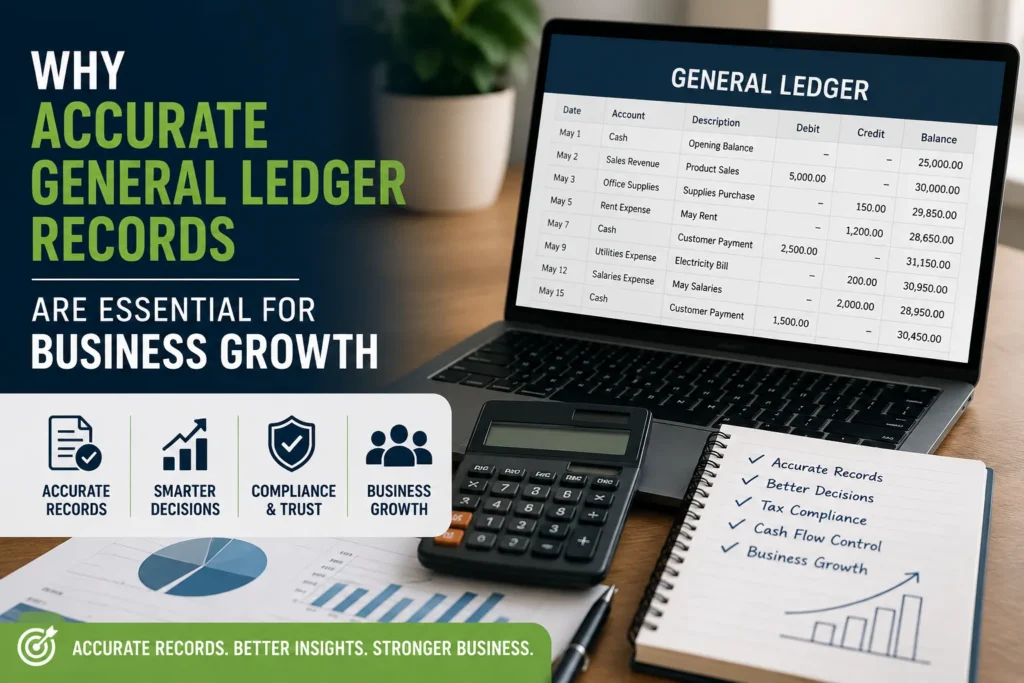
The general ledger is not exciting. It is a bunch of numbers. Debits and credits. Accounts you barely remember setting up.
But your general ledger is the single source of truth for your business finances. If it is wrong, everything else is wrong. Your financial reports. Your tax filings. Your business decisions.
Your general ledger records tell you exactly where your money’s coming from and where it’s going. It shows if you’re actually making a profit. It helps you catch problems before they blow up. And when it’s time to grow? It gives you the data you need to make smart moves.
What Are General Ledger Records?
A general ledger is the master record of every single business transaction. Every sale, every expense, every payment, it all goes in there. And it’s organized into accounts: assets, liabilities, equity, revenue, and expenses. That’s how you keep track of everything.
General ledger records are the detailed entries that make up that master record. They show every transaction, the date, the amount, the account affected, and a brief description. Think of it as the DNA of your financial health.
Without accurate general ledger records, you are flying blind. You have no reliable way to know how your business is really performing.
Why Accurate General Ledger Records Matter
Reliable Financial Reporting
Your general ledger records are the foundation of every financial reporting. If the data is inaccurate, your reports are inaccurate. You could make costly decisions based on wrong numbers. Good financial reporting starts with good data.
Better Decision-Making
Every business decision has financial implications. Should you hire more staff? Buy new equipment? Expand to a new location? General ledger records give you the data to make smart choices.
Easier Tax Compliance
Accurate records make tax time much easier. You have everything you need. No scrambling for receipts. No guessing about expenses. And accurate records help you avoid costly penalties and reduce audit risk.
Cash Flow Management
Cash flow is the lifeblood of any business. General ledger reconciliation helps you track cash flow accurately and identify potential shortfalls before they become a problem.
Investor and Lender Confidence
Investors and lenders want to see your financials. Clean, accurate general ledger record build trust. They show you are organized and know your numbers. That makes it easier to secure funding for growth.
Best Practices for General Ledger Maintenance
Reconcile Regularly
Here is a simple rule. Reconcile your bank accounts and credit cards every single month. Compare your general ledger records against your bank statements. Catch errors early before they compound.
Standardize Your Chart of Accounts
A consistent chart of accounts makes everything easier. Every transaction goes to the same place, every time. It creates a clean, organized structure that simplifies reporting and reduces confusion.
Record Transactions Promptly
Do not wait. Record transactions as they happen. The longer you wait, the harder it is to get it right. Prompt recording also gives you real-time visibility into your cash policy life insurance.
Use Technology
General ledger accounting software automates many tasks. It reduces errors and saves time. Most modern systems integrate with bank feeds, making reconciliation much easier.
Regular General Ledger Reconciliation
General ledger reconciliation is the process of comparing ledger balances with external sources. For example, comparing cash balances against bank statements or accounts payable against vendor statements. This catches errors and ensures accuracy.
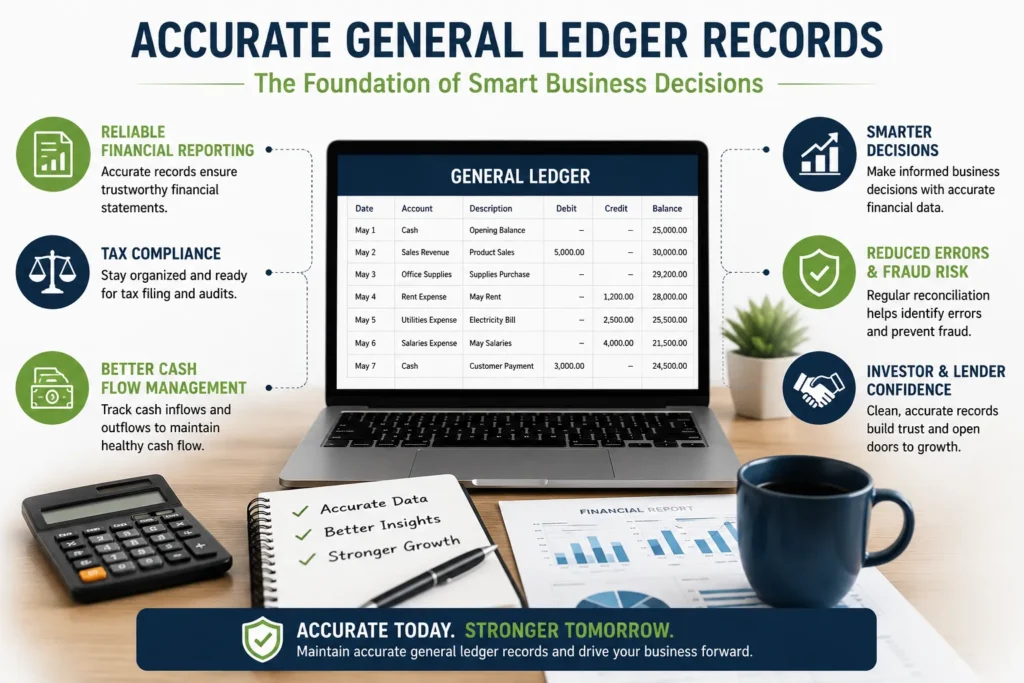
What a Well-Maintained General Ledger Gives You
– Better business decisions based on reliable data
– Easier compliance for taxes and regulations
– Less stress during tax season
– More efficient operations by identifying areas to cut costs and optimize resources
– Confidence from lenders and investors
Conclusion:
Your general ledger records are not just paperwork. They are the financial map of your business. When they are accurate, you know exactly where you stand and where you are going. General ledger maintenance is not just about keeping records. It is about keeping your business healthy .
The good news? It does not have to be complicated. Stay consistent. Reconcile regularly. Use technology to automate. And if you need help, get it. The investment will pay for itself many times over.
Frequently Asked Questions
What are general ledger records?
General ledger records are detailed entries of every financial transaction made by a business. They are organized by account and form the complete financial history of the business.
Why is general ledger maintenance important?
General ledger maintenance ensures your financial records are accurate and up-to-date. It provides the foundation for reliable financial reporting, tax compliance, and informed business decisions.
What is general ledger reconciliation?
General ledger reconciliation is the process of comparing general ledger balances with external records to ensure accuracy. It catches errors and prevents fraud.
What is general ledger accounting?
General ledger accounting involves recording all financial transactions in the general ledger. It is the core of a business’s financial record-keeping.
How do I maintain a clean general ledger?
Follow accounting best practices like reconciling accounts monthly, standardizing your chart of accounts, recording transactions promptly, and using reliable accounting software.
What problems can inaccurate general ledger records cause?
Inaccurate general ledger records lead to unreliable financial reports, poor decision-making, tax issues, cash flow problems, and difficulty securing funding.
What are general ledger reports?
General ledger reports show a business’s financial activity in detail. They provide a complete view of transactions and are essential for financial reporting.
How do I interpret a general ledger?
Interpretation of general ledger involves analyzing account balances to understand the financial health of a business. It helps with budgeting, forecasting, and strategic planning.
Can I do general ledger accounting myself?
Yes, many small business owners manage their own general ledger accounting using software like QuickBooks or Xero. However, a professional bookkeeper or accountant can ensure accuracy and save time.
How often should I reconcile my general ledger?
You should reconcile your general ledger at least monthly. This catches errors early and ensures accurate financial records.