
The first thing to understand is that cash flow vs profit is a real thing that kills businesses every single day. Once that difference is understood properly, everything starts making sense and the stress goes down immediately.
Most business owners focus on profit because that is what everyone talks about. But cash flow is what actually keeps the doors open. So it is not the same thing, it is completely different.
What Is Cash Flow?
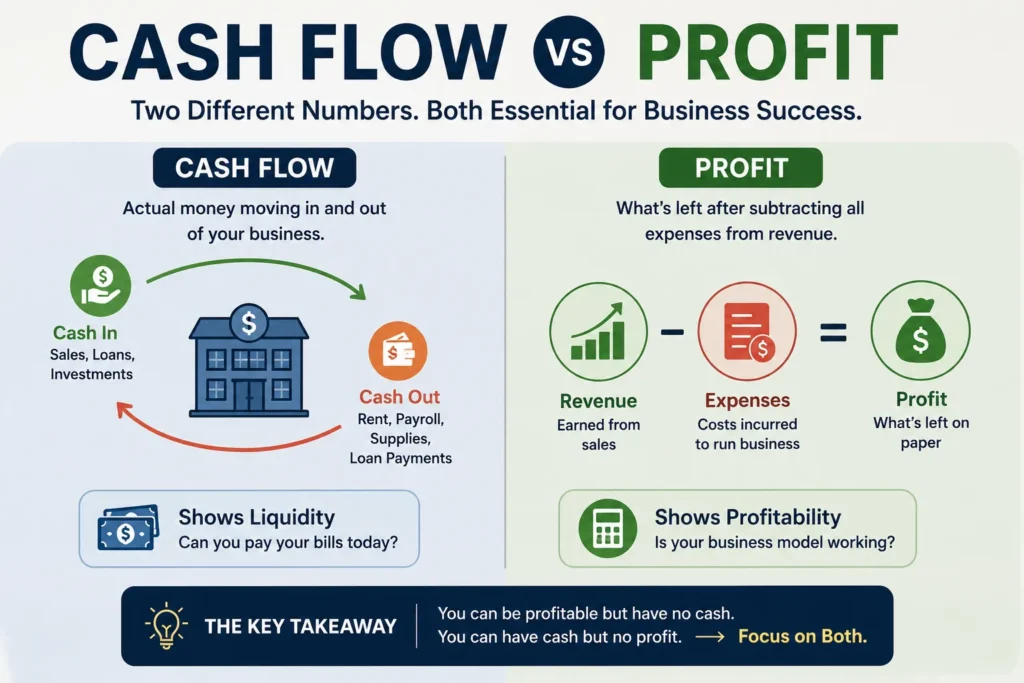
What is cash flow gets asked all the time. Here is the deal. Cash flow is the actual money moving in and out of your business. Cash comes in from customers, loans, and investments. Cash goes out for rent, payroll, supplies, and loan payments. Cash flow tracks real dollars. Not promises. Not invoices. Real money.
When more cash comes in than goes out, that is positive cash flow. You can pay bills. You can buy inventory. You can make payroll. When more cash goes out than comes in, trouble starts. Bills pile up. Payroll gets missed. The business struggles.
What Is Profit?
Profit is what is left after subtracting all expenses from revenue. It is an accounting number. Not a cash number. Revenue gets recorded when you make a sale. Not when you get paid. Expenses get recorded when you incur them.
Not when you pay them. This timing difference can make a business look profitable while having zero cash. There is gross profit, operating profit, and Net Profit after taxes and interest. All are accounting figures. None tell you how much cash you actually have.
Cash Flow vs Profit: The Main Difference
The difference between cash flow and profit comes down to timing. Cash flow vs profit answers different questions:
– Profit tells you: Is your business model working?
– Cash flow tells you: Can you pay your bills today?
A business can show big profits but have no cash. This happens when sales are on credit and customers pay slow. Revenue is recorded. Profit looks great. But no cash is in the bank.
Example. A growing business lands big contracts. Revenue soars. Profit looks fantastic. But they must buy inventory and pay staff to fill those orders. Customers pay in 60 to 90 days. Bills are due now. The business runs out of cash. Profitable on paper. Bankrupt in reality.
Cash Flow Statement vs P&L
The P&L shows revenue, expenses, and profit over time. It uses accrual accounting. Sales recorded when made. Expenses recorded when incurred. It does not show when cash actually moves.
The Cash Statement tracks actual cash movements. It shows cash received and cash paid. It explains why profits do not match cash balances. Together, they show Business Financial Health. The P&L shows if the business is sustainable. The Statement shows if it can survive.
Is Cash Flow the Same as Profit
Is cash flow the same as profit is a question many owners ask. The answer is no. Cash flow vs profit breaks down like this:
– Profit is accounting based on revenue earned and expenses incurred
– Cash flow is actual money moving in and out
A business can be profitable and cash-poor. A business can have positive cash flow and show no profit. That happens when selling off inventory, collecting receivables, or taking on debt.
Positive Cash Flow Keeps You Alive
Positive cash flow keeps the business running. Without it, you cannot function. Suppliers must get paid. Employees must get paid. Rent and utilities must get paid. Cash flow covers all of it.
Positive cash flow also gives you flexibility. You can invest in growth. Buy inventory at discounts. Weather slow seasons. Survive unexpected expenses.
Businesses with positive cash flow sleep at night. Those without it are constantly stressed.
How to Manage Cash Flow vs profit
Understanding the difference between cash flow vs profit is step one. Managing cash flow is step two. Improve receivables. Invoice immediately. Offer discounts for early payment. Follow up on overdue accounts.
Manage payables. Pay on time but not early. Use vendor credit terms. Negotiate better terms. Control inventory. Too much ties up cash. Too little loses sales. Find the balance. Maintain a cash reserve. A buffer covers unexpected expenses and slow periods.
Forecast cash flow. Know what is coming in and going out over the next few weeks. Plan ahead.
How to Improve Profit
Profit matters too. Without it, you cannot grow. Increase revenue. Raise prices if possible. Add new products or services. Expand into new markets. Reduce costs. Cut unnecessary expenses. Negotiate better prices. Improve efficiency. Focus on higher-margin products. Drop low-margin offerings that do not pay off.
Which Matters More
Both cash flow vs profit matter. But for different reasons. Cash flow keeps you alive today. Profit keeps you alive tomorrow.
In the short term, positive cash flow is more important. You cannot survive without cash. You can survive without profit for a while, as long as cash is coming in.
In the long term, profit is essential. Cash flow from operations should eventually turn into profit. If it never does, the business model is broken.
The goal is both. Strong profit and strong positive cash flow. That is a healthy business.
Conclusion
The difference between cash flow and profit is critical. Profit shows if your business model works. Cash flow shows if you can survive.
Cash flow vs profit is not either-or. Both are essential. Both need attention.
Understanding what is cash flow and how it differs from profit helps you make better decisions. It prevents the number one cause of business failure. Running out of cash.
Frequently Asked Questions
What is the main difference between cash flow and profit?
Cash flow is actual money moving in and out. Profit is an accounting figure based on revenue earned and expenses incurred, regardless of when cash changes hands.
Can a business be profitable but have no cash?
Yes. This happens when sales are on credit and customers pay slow. Revenue is recorded but cash is not in the bank. Bills still must be paid.
Which is more important: cash flow or profit?
Both. Cash flow keeps you alive today. Profit ensures long-term sustainability. In the short term, positive cash flow is more urgent.
What is positive cash flow?
Positive cash flow means more cash comes in than goes out. You can pay bills, make payroll, and invest in growth.
What is a cash flow statement?
It tracks actual cash movements in and out. It shows cash from operations, investments, and financing.
How does a statement differ from a P&L?
A P&L shows revenue and expenses using accrual accounting. It tracks actual cash received and paid. They tell different stories.
Can a business have positive cash flow but no profit?
Yes. This happens when selling off inventory, collecting receivables, or taking on debt. Not sustainable long-term but keeps you going temporarily.
What causes cash flow problems?
Slow-paying customers, too much money tied up in inventory, growing too fast, seasonal ups and downs, and the economy taking a dip.
How can I improve cash flow?
Send invoices right away. Offer discounts for early payments. Stay on top of overdue accounts. Keep inventory in check. And set aside a cash reserve for when things get tight.
How can I improve profit?
Two ways. Bring in more money, raise prices or add new offerings. Or cut costs, find better supplier deals and run things more efficiently. Do both, and you’re golden.