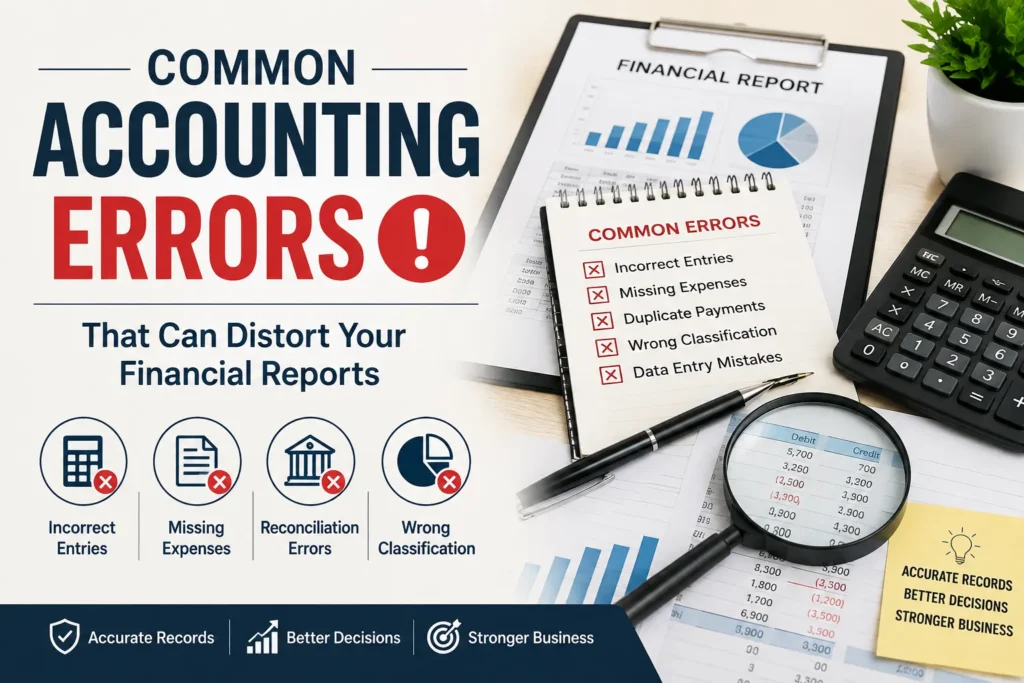
Accounting errors can happen when you least expect them. Maybe a number is entered incorrectly. Maybe an expense is forgotten. Or perhaps the same payment is recorded twice.
It can happen. But here is the problem. A small mistake can cause a much bigger issue when it stays in your books for too long. Your business may look more profitable than it really is. Your cash balance may not be right. Even your tax records can end up showing the wrong information.
That is why it is important to understand accounting errors and know what to look for.
What Are Accounting Errors?
Accounting errors are simply mistakes made when handling your business finances. Maybe the wrong number was entered. Perhaps a transaction was missed. Sometimes, the money is recorded, but it is placed in the wrong account. The mistake may seem small. The numbers can still add up. But the report may still be wrong.
Common Examples of Errors
Some common examples include:
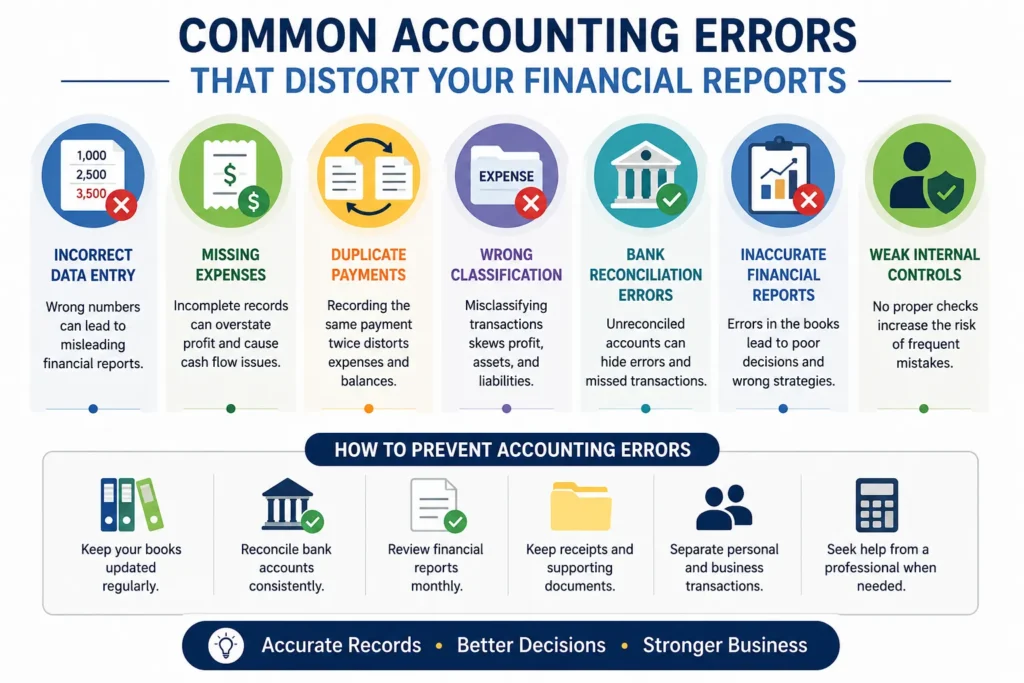
- Entering the wrong number
- Recording a payment twice
- Forgetting an expense
- Missing business income
- Using the wrong account
- Showing the wrong bank balance
- Mixing personal and business spending
These common accounting errors can change your income, expenses, profit, and cash flow.
What Causes Errors in Small Business?
Accounting errors in small business often happen because there is simply too much going on. Customers need help. Bills need to be paid. Employees need attention. New work keeps coming in. Then bookkeeping gets pushed back. One day becomes one week.
One week becomes one month. By then, a receipt may be missing. A payment may be forgotten. Nobody may remember why a certain transaction was made.
These accounting mistakes can also happen when records are entered too quickly or nobody checks them afterward.
Common Problems to Watch
Look out for things like:
- Forgetting small expenses
- Entering the wrong amount
- Recording the same payment twice
- Mixing personal and business spending
- Using the wrong account
- Not reviewing financial reports
These common errors may not seem serious today. But if they keep happening, they can slowly make your financial records unreliable.
What Bookkeeping Mistakes Should You Avoid?
Common bookkeeping mistakes are often easy to make. They are also easy to miss. You may plan to update your books tomorrow. Then tomorrow becomes next week. Before you know it, your records are months behind.
Bookkeeping Errors to Avoid
Try to avoid:
- Mixing personal and business expenses
- Putting off bookkeeping
- Losing receipts and invoices
- Entering the same transaction twice
- Using the wrong expense category
- Ignoring your bank statements
These are important bookkeeping errors to avoid. Keeping your books updated can also help reduce common bookkeeping mistakes.
Can Data Entry Create Financial Reporting Errors?
Yes. Sometimes, one wrong number is all it takes. Imagine your business spends $800. But someone enters $8,000. Now your books show an expense that is ten times higher. Your profit will look lower too.
The same thing can happen with customer payments. A customer may have already paid, but if the payment goes into the wrong account, your records may still show money as unpaid.
These accounting errors can affect income, expenses, customer balances, profit, and cash flow. This is how a simple typing mistake can turn into a financial reporting problem.
Can Wrong Classification Cause Financial Statement Errors?
Yes. A transaction can be recorded, but still be recorded in the wrong place. That can create financial statement errors. For example, your business buys expensive equipment. Instead of recording it as an asset, the full amount is entered as a regular expense.
But the report is still not telling the full story. Wrong classification can affect:
- Profit
- Expenses
- Assets
- Liabilities
- Cash flow
This is why it matters to put each transaction in the right account.
Why Should Bank Accounts Be Reconciled?
Bank reconciliation is really just a simple check. Look at your books.
- Then look at your bank statement.
- Do they match?
- If they do, great.
- If they do not, find out why.
Maybe a bank fee was missed. Perhaps a payment was entered twice. A deposit may have been recorded incorrectly. These checks can help uncover accounting errors before they cause bigger problems. For many businesses, checking the accounts once a month is a good habit.
Inaccurate financial reports can make a business look better or worse than it really is.
How Can You Prevent Accounting Errors?
Preventing accounting errors does not have to be complicated. A few good habits can help.
- Check Your Accounts
Compare your books with your bank and credit card statements. If something does not match, take a look.
- Review Your Reports
Do not just prepare your financial reports and forget about them. Read them. If expenses suddenly go up, ask why. If income drops, find out what happened.
- Keep Your Documents
Keep your receipts, invoices, and payment records. You may need them later when something does not look right.
- Keep Personal and Business Money Separate
This simple step can save you a lot of confusion. Keep your personal spending out of your business records.
- Get Help When Needed
Sometimes, the books become too much to handle. That is when a bookkeeper can help. A professional can review your records and find problems that may have been missed.
Conclusion:
Your financial reports should tell you what is really happening in your business.
- How much money came in?
- How much did you spend?
- How much did you actually earn?
Good bookkeeping helps you answer these questions. Keep your records updated. And when accounting errors appear, do not ignore them.
The sooner you correct a mistake, the easier it is to keep your financial records accurate.
With better records, you can understand your finances more clearly, plan ahead, and make smarter decisions for your business.
Frequently Asked Questions
What are the most common accounting errors?
Recording the same payment twice. Forgetting expenses. Picking the wrong accounts. Not checking your bank records regularly. That’s what usually goes wrong.
How do accounting errors affect financial reports?
They throw everything off like income, expenses, profit, cash flow, assets, liabilities. You end up staring at numbers that don’t actually match what’s really going on.
What are accounting errors in small business?
Mixing up personal and business money. Putting off bookkeeping. Forgetting to record transactions. Punching in wrong numbers.
What bookkeeping errors should businesses avoid?
Don’t delay your bookkeeping. Don’t lose receipts. Don’t mix business and personal spending. And don’t skip reconciling your books with your bank statements.
Can financial reporting errors affect business decisions?
Absolutely. They can make your business look healthier or sicker than it actually is. That can mess with your head when you’re deciding to hire, borrow, spend, or plan for the future.
Why is bank reconciliation important?
It’s how you double-check your records against the bank’s records. Helps you spot missing transactions, duplicate payments, hidden bank fees, and deposits that never made it in.
Can accounting software prevent accounting mistakes?
No. It makes bookkeeping easier. But it won’t catch everything. Wrong data, duplicate entries, and incorrect account categories can still sneak in.
How can a business prevent accounting errors?
Keep your books current. Check your bank accounts often. Hold onto your receipts. Keep business and personal money separate. Review your financial reports regularly.
When should financial reports be reviewed?
At least once a month. Catching changes early — in income, expenses, cash flow, or balances — stops small problems from becoming big ones.
Why is accurate bookkeeping important?
It tells you the real story of your business. Makes managing cash flow easier, taxes less painful, and decisions way clearer.