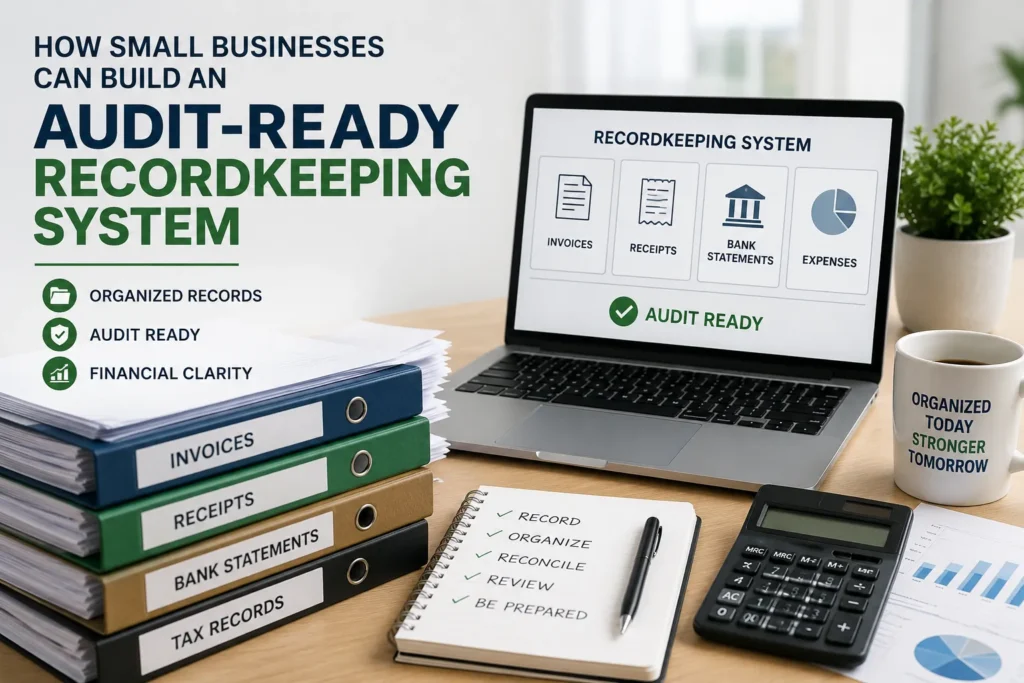
An audit-ready recordkeeping system is simply a clean, organized way of keeping all business financial records in order so everything is ready whenever needed for taxes, audits, or checks.
No stress, no searching at the last minute, no missing papers. Just a proper system where every expense, invoice, and payment is saved and tracked clearly.
For small businesses, this becomes a game changer because once records are messy, everything else becomes harder too.
That’s why an audit-ready recordkeeping system matters from day one.
What does an Audit-Ready Recordkeeping System Really Mean?
An audit-ready recordkeeping system is just this: every rupee in and out of the business is recorded with proof attached.
Money comes in → recorded
Money goes out → recorded
Everything → backed with document
Simple.
It connects with small business recordkeeping, where daily transactions are not ignored but handled regularly and properly.
Once this habit is built, nothing feels unclear anymore.
Why it Actually Matters
Without an audit-ready recordkeeping system, things may look fine at first, but later problems start showing.
- Receipts go missing
- Numbers don’t match
- Tax time becomes stressful
- Audits feel heavy
But when the business records management system is in place, everything is already sorted.
It helps:
- Stay ready for audits anytime
- Keep financial clarity
- Reduce tax stress
- Avoid confusion later
It also supports bookkeeping compliance, so everything stays aligned with proper rules.
How the Audit-Ready Bookkeeping System Works in Real Life
An audit-ready recordkeeping system is built on simple daily actions.
Keep Everything in One Place
All invoices, receipts, and bills are stored properly instead of being scattered everywhere. This is part of financial document organization.
Record Everything Regularly
Every income and expense is noted on time so nothing gets missed. This builds strong bookkeeping documentation.
Maintain a Clear Trail
Every entry links back to proof so everything can be traced easily. This is audit trail documentation.
When these are done consistently, the audit-ready recordkeeping system becomes strong.
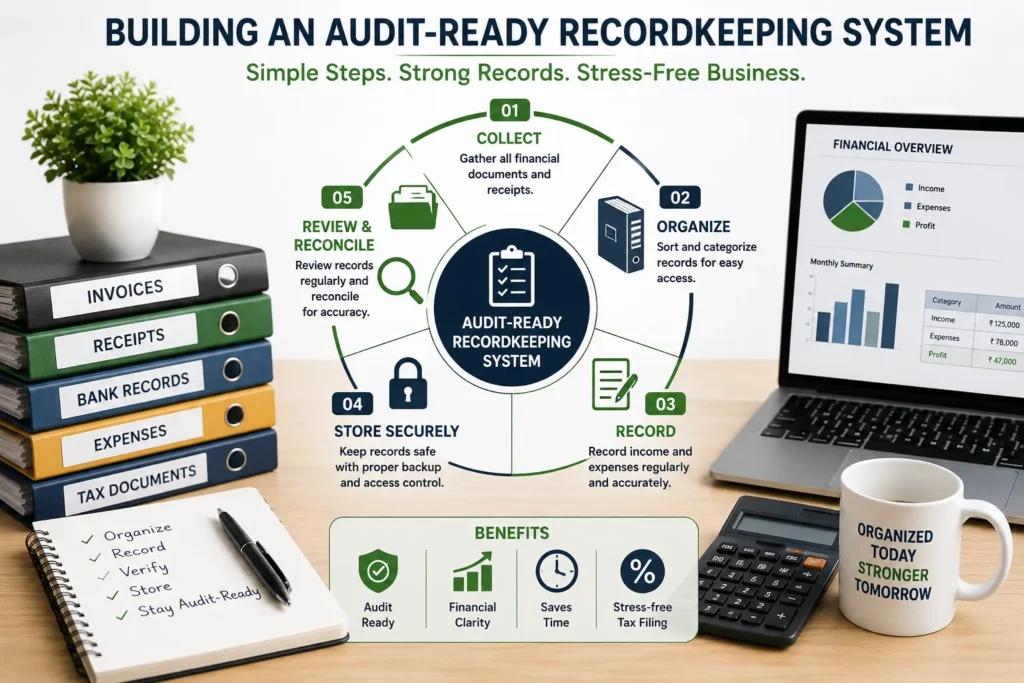
Simple steps to build it
Step 1: Collect everything first
Start by gathering all receipts, invoices, and payment records in one place. This becomes the base of a financial recordkeeping system.
Step 2: Organize properly
Make simple folders like income, expenses, taxes, and bank records. This improves financial document organization and keeps everything easy to find.
Step 3: Record regularly
Don’t delay it. Update records daily or weekly so everything stays accurate. This keeps the audit-ready recordkeeping system working smoothly.
Small Business Compliance Records (important)
Every business has to follow document retention requirements, which means keeping certain records for a fixed number of years.
This is part of tax recordkeeping for small businesses, where everything must be available if asked later.
A proper business record retention policy makes sure nothing important is lost or deleted too early.
Common mistakes to avoid
Mixing personal and business money
This creates confusion and breaks the system.
Delaying record updates
Waiting too long leads to missing details.
No backup system
If files are stored in only one place, risk increases.
These mistakes weaken the audit-ready recordkeeping system quickly.
What changes when it’s done right
Once a proper audit-ready recordkeeping system is in place, everything becomes easier.
- No panic during audits
- Faster tax filing
- Clear money tracking
- Better control over business finances
It also improves business audit preparation, because everything is already ready.
Conclusion
Running a small business becomes much easier when records are clean.
An audit-ready recordkeeping system simply keeps everything organized, traceable, and ready at all times.
No confusion. No missing papers. Just a smooth, controlled way of handling business finances.
Frequently Asked Questions
What is an audit-ready recordkeeping system?
It is a simple way of keeping all business financial records organized so everything is easy to find, properly tracked, and ready for audits or tax checks without last-minute stress or confusion.
Why do small businesses need it?
Because it keeps financial records clean, avoids missing documents, reduces tax stress, and makes audits much easier by keeping everything already organized and ready.
What happens without proper recordkeeping?
Without it, businesses face missing receipts, incorrect numbers, confusion during tax filing, and stress during audits because nothing is properly tracked or organized.
How often should records be updated?
Records should be updated regularly, ideally daily or weekly, so nothing is missed and everything stays accurate and easy to manage.
What documents should always be kept?
Invoices, receipts, bank statements, expense records, payroll details, and tax documents should always be saved for proper financial tracking and audit readiness.
Is software required?
Not in the beginning. Simple spreadsheets can work if used properly. The key is consistency and proper organization, not expensive tools.
How long should records be stored?
Most records should be kept for several years depending on tax and legal requirements so they are available when needed.
What is the biggest mistake in recordkeeping?
Mixing personal and business expenses because it creates confusion and makes financial tracking unreliable.
How does it help during tax filing?
It helps because all income and expenses are already recorded and organized, making tax filing faster, easier, and more accurate.
Can small businesses build it easily?
Yes, by starting with simple habits like saving receipts, recording transactions regularly, and keeping everything organized in one place.