Tax planning strategies are not something that should wait until tax season shows up again. The real advantage comes immediately after filing, when everything is still fresh and clear. That is the moment when decisions for the next year can actually change how much tax gets paid later.
Most people only think about taxes when pressure starts building near deadlines. Income is already earned, expenses are already spent, and everything is rushed at the end. But the smarter approach is different. It is steady, simple, and spread across the full year using practical tax saving strategies that quietly reduce taxable income step by step.
Tax Planning Strategies Start Right After Filing
Right after filing is the best starting point because everything is visible and looking at how to reduce income tax. Numbers are in front of you, mistakes are easy to see, and patterns are already clear.
At this stage, tax strategies should focus on understanding what happened, not just filing and forgetting.
This is where attention goes:
- What increased tax last year
- What expenses were missed
- What deductions were not tracked
- Where income was not structured properly
Once this is clear, the next year does not feel random anymore. It starts becoming planned.
Why Tax Planning is Really About Control, Not Stress
Tax is not just a yearly bill. It is the result of hundreds of small financial decisions made during the year.
That is where tax savings matter most. They bring control back into the process.
Instead of reacting at the end, the focus shifts to:
- Managing income as it comes in
- Tracking expenses in real time
- Using timing as an advantage
- Making deductions part of everyday activity
When this mindset changes, tax stops feeling like a surprise and starts becoming something manageable.
Income Decisions Shape Everything
One of the strongest tax planning strategies is learning how income timing and structure affects tax outcomes.
Income is not just what is earned. It is when it is received and how it is categorized.
Simple but powerful actions include:
- Spreading income across the year instead of clustering it
- Avoiding unnecessary taxable withdrawals
- Using retirement contributions to reduce taxable income early
- Structuring business income properly for better control
For anyone running a business, small business tax planning becomes even more important because income flow is flexible and can be planned.
Expenses That Quietly Reduce Tax
Many people spend money but never connect it to tax benefits. That is where tax gets unnecessarily higher.
Strong planning strategies always rely on consistent expense tracking, not guesswork later.
Common deductible areas:
- Business-related tools and software
- Travel used for work purposes
- Home office usage when applicable
- Training, courses, and skill development
- Operational and maintenance costs
Every properly tracked expense becomes part of overall tax savings, but only if it is recorded at the right time.
Timing Decisions That Change Everything
Timing is one of the most underrated parts of planning strategies, but it can have a big impact.
It is not only about what is earned or spent, but when it happens.
For example:
- Moving expenses into the current year to reduce tax sooner
- Delaying income where legally possible
- Grouping deductible expenses strategically
- Planning big purchases around tax periods
These small adjustments do not feel major in the moment, but they often decide the final tax outcome.
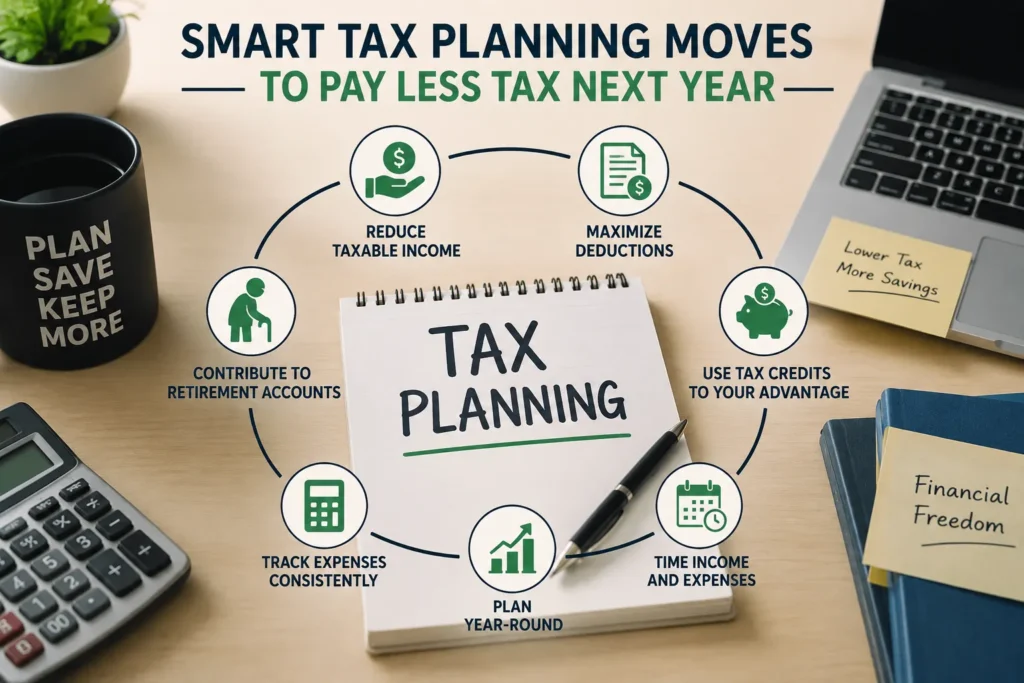
Retirement Contributions as a Simple Tax Tool
Retirement planning is often seen as long-term savings, but it also works as a tax tool in the present.
This is one of the most practical tax planning strategies because it works in two directions at once.
What happens:
- Money is contributed before taxation
- Taxable income reduces immediately
- Tax liability drops for the year
- Savings continue growing for the future
That is why it is often used as a stable part of tax mitigation strategies.
Tax Credits and Deductions Working Together
A lot of people miss the difference between credits and deductions, but both matter.
Deductions reduce income before tax is calculated. Credits reduce the tax itself.
Effective tax strategies use both together, not separately.
Examples include:
- Education-related credits
- Business incentives
- Family-based benefits
- Energy or investment credits
When both are used properly, overall tax savings become much stronger without extra effort.
Building a Year-Round Tax System
A proper tax plan is not something done once. It is something followed every month.
A simple structure looks like this:
During the month:
- Record income immediately
- Track every expense
- Keep personal and business money separate
Every quarter:
- Review income changes
- Adjust estimated tax payments
- Check missed deductions
Year end:
- Finalize documentation
- Review patterns
- Prepare improvements for next year
This system is what turns basic filing into real tax planning strategies.
Common Mistakes That Increase Tax Without Notice
Many people pay more tax simply because of avoidable mistakes.
These include:
- Not tracking small expenses consistently
- Mixing personal and business accounts
- Ignoring retirement contributions
- Making financial decisions only at year end
- Not reviewing income flow during the year
Avoiding these alone strengthens overall tax mitigation strategies without needing anything complex.
Simple Breakdown of Tax Reduction Focus
| Area | What it does | Impact |
| Income timing | Controls when income is taxed | High |
| Expense tracking | Captures deductions properly | High |
| Retirement contributions | Reduces taxable income | High |
| Credits | Direct tax reduction | Medium-High |
| Planning system | Keeps everything consistent | High |
Thinking Beyond Basic Tax Reduction
Advanced tax mitigation strategies focus on long-term structure instead of short-term fixes.
This includes:
- Managing investments in a tax-efficient way
- Planning business reinvestments carefully
- Balancing gains and losses strategically
- Using retirement and savings structures properly
At this level, tax planning becomes part of financial control, not just filing work.
Conclusion:
Real tax savings do not come from a single decision. They come from repeated habits throughout the year.
When tracking is consistent, when expenses are recorded early, and when income is reviewed regularly, tax stops being unpredictable.
That is the real outcome of strong tax planning strategies.
Frequently Asked Questions
What are tax planning strategies?
Tax strategies are simple methods used throughout the year to manage income, expenses, and deductions so that taxable income stays lower in a legal and organized way instead of waiting until tax season.
When should planning strategies actually start?
The best time is immediately after filing taxes because that is when the full financial picture is clear, making it easier to fix mistakes and plan better decisions for the next year.
How do tax planning strategies help reduce taxes?
Tax strategies help by tracking expenses properly, using deductions, timing income, and contributing to retirement accounts so taxable income is reduced in a structured way.
What are the most ignored tax deduction strategies?
Most people ignore small business expenses, mileage, home office costs, subscriptions, and training expenses even though they can significantly reduce taxable income when tracked correctly.
Are tax strategies useful for small businesses?
Yes, small business tax planning is one of the most effective areas because income and expenses can be managed more flexibly compared to salaried income.
What is the difference between tax savings and tax mitigation strategies?
Tax savings are the final reduced tax amount paid, while tax mitigation strategies are the planning methods used throughout the year to legally reduce how much tax is owed.
How do retirement contributions help with tax strategies?
Retirement contributions reduce taxable income immediately and also build long-term savings, making them a key part of most planning strategies.
Why is timing important in planning strategies?
Timing matters because when income is received or expenses are made can change how much tax is calculated for that year.
How often should tax planning be reviewed?
Tax planning should be reviewed monthly for tracking, quarterly for adjustments, and at year end for final optimization.
What is the biggest mistake people make in tax planning strategies?
The biggest mistake is waiting until the last moment to organize finances, which leads to missed deductions and higher taxable income.