Bookkeeping cleanup is the process of fixing, organizing, and correcting financial records so everything actually reflects what is happening in the business. When this step is ignored, tax filings start going wrong quietly in the background. Expenses get missed, income gets duplicated, and suddenly the tax bill becomes higher than it should be.
This guide explains how messy records increase tax costs, and how better financial habits can prevent that in 2026.
Why Clean Financial Records Matter More Than Most Businesses Think
When financial data is not organized, tax time turns into guesswork. This is where bookkeeping cleanup becomes important because it brings everything back into order.
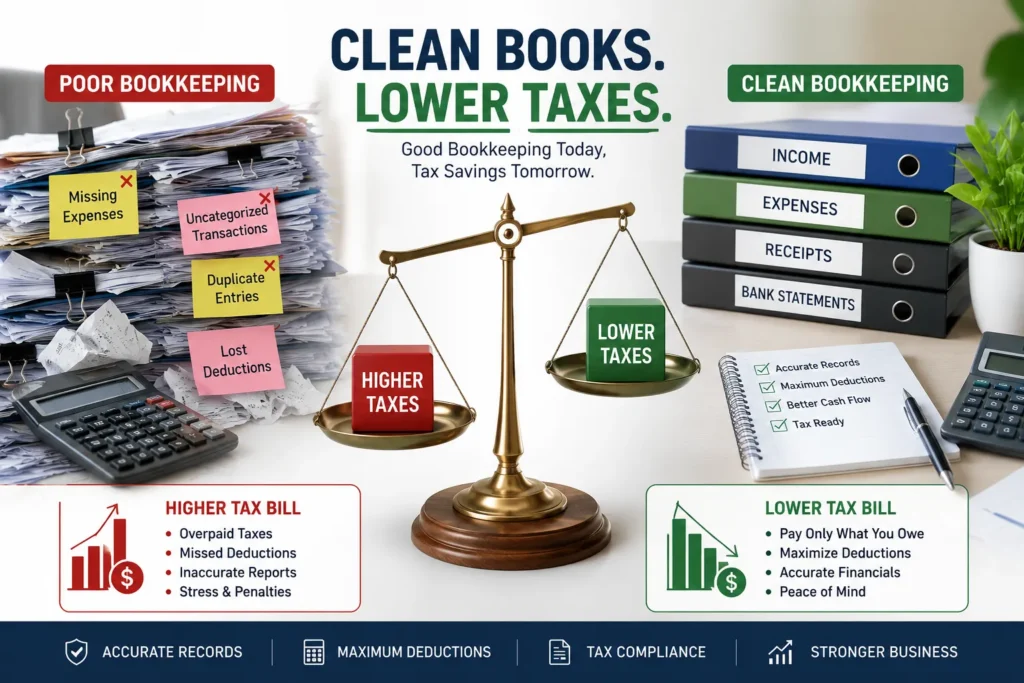
Without proper cleanup, even strong businesses end up paying more tax than required. Missing receipts, untracked expenses, and unclear entries all reduce tax liability of claiming legal tax deductions.
Good financial clarity always starts with bookkeeping cleanup, because it makes sure every transaction is properly recorded, categorized, and ready for tax filing.
How Messy Books Quietly Increase Tax Payments
A lot of tax overpayment does not happen because of high income, but because of errors hidden inside records. When bookkeeping cleanup is not done, financial data becomes unreliable.
This bookkeeping tips leads to:
- Expenses not recorded properly
- Income showing higher than actual
- Deductions not applied
- Transactions entered twice
- Business costs left out completely
All of this pushes taxable income upward. The result is simple: more tax paid than necessary.
Without bookkeeping service, even small mistakes keep repeating and slowly increase tax liability year after year.
Common Bookkeeping Mistakes that Lead to Higher Taxes
Most small business bookkeeping follow similar patterns when records are not maintained properly. These mistakes look small but create big tax problems later.
Common issues include:
- Personal and business expenses mixed together
- Receipts lost or never recorded
- Late data entry in accounting systems
- Wrong expense categories
- Bank accounts not properly matched
When these problems build up, financial reports stop showing reality. That is exactly when bookkeeping cleanup becomes necessary to correct everything before tax filing.
Even one year of poor records can lead to overpayment if not fixed through proper bookkeeping cleanup.
Fixing Records the Right Way for Accurate Taxes
A proper system is not complicated, but it must be consistent. The entire goal is to bring financial clarity back into the system.
The bookkeeping cleanup process usually follows a simple structure:
- Collect all bank statements, invoices, and receipts
- Identify missing or duplicate entries
- Match transactions with actual records
- Correct wrong categories
- Rebuild accurate financial reports
At this stage, step-by-step correction is done carefully so nothing is missed. Even one missing entry can change tax results, which is why bookkeeping cleanup must be detailed and structured.
Once this is complete, financial reports start showing the real picture of the business instead of random errors.
How Clean Books Improve Tax Efficiency in 2026
Tax systems are becoming more data driven, which means accuracy matters more than ever. When records are clean, tax calculations become straightforward and predictable.
With proper bookkeeping cleanup, businesses can:
- Identify all eligible deductions
- Avoid paying tax on incorrect income
- Improve financial planning
- Reduce errors during tax filing
- Stay compliant with regulations
The difference is clear. Clean records reduce confusion, while messy records create unnecessary tax pressure. That is why bookkeeping cleanup directly affects how much tax is paid every year.
Clean vs Messy Books: Real Financial Impact
| Area | Messy records impact | Clean records impact |
| Tax calculation | Overpayment risk | Accurate filing |
| Expense tracking | Missing entries | Full visibility |
| Deductions | Lost opportunities | Fully claimed |
| Reporting | Confusing data | Clear insights |
| Decision making | Guesswork | Reliable planning |
The real difference often comes down to whether bookkeeping cleanup has been done regularly or ignored for too long.
Preventing Tax Issues Before They Start
The best way to avoid tax surprises is to stay consistent throughout the year instead of fixing everything at the end.
Simple habits include:
- Weekly expense tracking
- Monthly reconciliation of accounts
- Keeping digital receipts organized
- Avoiding mixed personal transactions
- Regular bookkeeping cleanup to correct errors early
When these habits are followed, tax season becomes much easier and less expensive. Businesses that ignore these steps often end up rushing bookkeeping cleanup at the last minute, which leads to missed corrections.
Better Financial Habits for Long-term Control
Strong financial control is not about complex systems. It is about consistency and discipline.
Good habits include:
- Updating records immediately after transactions
- Checking bank statements regularly
- Reviewing expenses every month
- Fixing errors before they grow
- Running bookkeeping cleanup before year-end reporting
Over time, these habits reduce stress and improve financial clarity. Instead of reacting to tax problems, businesses stay ahead of them through regular bookkeeping cleanup.
Conclusion:
Most tax issues do not start during tax season. They start months earlier when records are ignored or left incomplete. Once errors build up, they silently increase tax payments without being noticed.
That is why structured bookkeeping cleanup becomes essential. It restores accuracy, fixes reporting gaps, and ensures taxes are calculated based on real numbers, not messy data.
Frequently asked questions
What is bookkeeping cleanup and why does it matter for taxes?
bookkeeping cleanup is the process of correcting and organizing financial records so tax filings are accurate. It matters because clean records help avoid overpaying taxes and ensure all deductions are properly claimed in time.
How does poor bookkeeping increase tax bills?
Poor records lead to missing expenses, incorrect income reporting, and lost deductions. This increases taxable income and results in higher tax payments even when actual profit is lower than shown.
How often should financial records be reviewed?
Financial records should be reviewed every month to prevent errors from building up. Regular checks help maintain accuracy and reduce the workload during tax season significantly.
What are the most common bookkeeping errors?
Common errors include mixing personal and business expenses, missing receipts, duplicate entries, and incorrect categorization of transactions. These mistakes often lead to higher tax costs.
Can bookkeeping errors be fixed before tax filing?
Yes, errors can be corrected before filing through proper cleanup of records. Reviewing transactions and updating reports ensures taxes are calculated correctly and fairly.
Why do small businesses suffer more from bookkeeping issues?
Small businesses often lack dedicated financial systems, which leads to inconsistent tracking. This increases the chance of errors and makes tax filing more expensive than necessary.
How does clean bookkeeping help with tax deductions?
Clean records make it easier to identify and claim all eligible deductions. Without proper tracking, many valid business expenses are often missed during tax filing.
What happens if bookkeeping mistakes are ignored for years?
Ignoring errors leads to inaccurate financial reports, higher tax payments, and potential compliance issues. Over time, fixing these problems becomes more difficult and time consuming.